


 |
Beautiful You by Suzanne Edmonds |
Each week, beauty enthusiast Suzanne Edmonds explores the best ways to take care of ourselves so that we love the skin we're in.
In the third and final column in my series on regulation of the beauty industry I would like to talk about one of my favourite subjects - nails.
Freshly manicured nails can make you feel like a million dollars but, if you are not careful, there could be a hidden cost - to your health.
In an industry that is largely unregulated, the potential for harm is two-fold. Inferior nail products can contain chemicals that are linked to cancer and hormone problems, while unhygienic practices can result in infections.
Take a minute to consider this: Nails are about 10 times more absorbent than your skin.
That means that whatever you paint on your nails can, to some degree, be absorbed into your body.
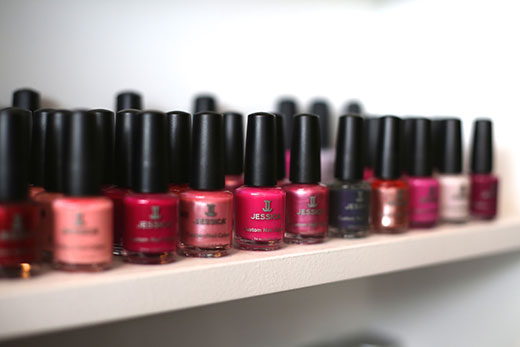
Researchers have identified toluene, formaldehyde and dibutyl phthalate, which are common nail polish ingredients, as the ‘toxic trio' because of their health impacts.
Toluene, an additive in petrol, and dibutyl phthalate can cause reproductive harm, while formaldehyde is a known carcinogen.
You should also avoid camphor and TPO (Trimethylbenzoyl Diphenylphosphine Oxide), which is a toxic curing agent that has been banned by European regulations.
Inferior nail products are likely to contain some, if not all, of these products so please take the time to read the labels and question your beauty therapist about what products are being used on your nails.
It takes the innocence out of that sparkly $2 bottle of Barbie-pink polish you buy from the discount store for your five-year-old doesn't it?
The safe application of nail products is equally important.
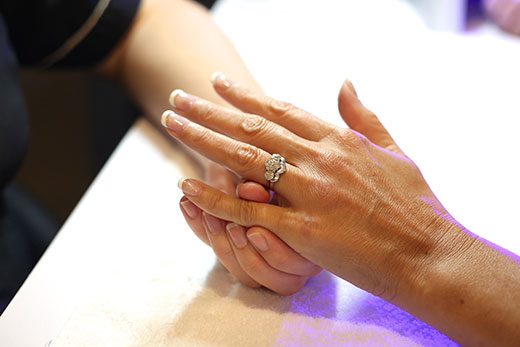
A bugbear of mine is the buffing of nails to apply gel polish. This is totally unnecessary and detrimental to the health of your nails, particularly when poor quality polishes are used. Be aware that some gels are ‘soft' and some are ‘hard'. I generally recommend using a soft gel.
On average, it takes six months for a nail to grow from the cuticle to the tip of your finger. If you are having gel polish applied regularly, and they are being buffed each time, after six months the tip of your nail will have been buffed six times, leaving it weak and vulnerable.
And remember how absorbent your nails are? Buffing removes the protective outer layer, letting even more nasties in.
With the right products and techniques, gel polish can – and should - be applied and removed in a way that keeps your nails strong, healthy and intact.
Bugbear number two: Cuticles should never be cut! Cuticles are living tissue and cutting them leaves your fingers open to infection.
You should also be vigilant about hygiene generally. You wouldn't eat at a restaurant where the plates are dirty and the floor hasn't been cleaned. A visit to a beauty salon is no different.
Dusty shelves, crumpled towels and unkempt nail polish and oil bottles could all be signs that hygiene is not a priority.
Is hand sanitiser readily available and do the therapists use it? Are manicure tools presented individually, or do they get tossed into a basket with equipment that is going to be reused without being sterilised?
Don't compromise your health for the sake of beauty. Be beautiful and be healthy. The two shouldn't be mutually exclusive.
Suzanne Edmonds is the owner of De Lux Beauty of Cherrywood, Tauranga.
GIVEAWAY!
Email us at [email protected] and be in the draw to win a manicure, using Jessica nail polish, which is free of the five offending toxic chemicals noted above.
Follow us on Facebook https://www.facebook.com/DeLuxBeauty