


.jpg)
A recreation and tourism researcher has told the Rena consent hearing to return the reef to public use as soon as possible.
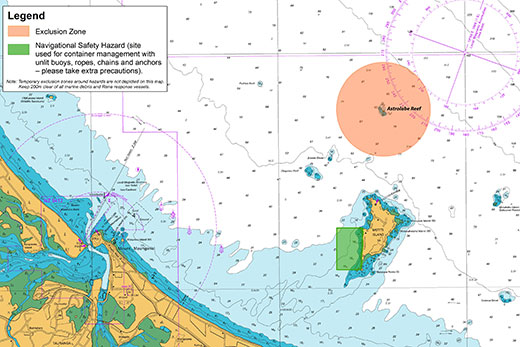
Public access to the popular fishing, diving and marine mammal watching site was stopped soon after the large containership ran aground on the reef on October 5, 2011. The ship subsequently broke up and sank.
The site of the wreck on Astrolabe Reef. Photos: Supplied.
Extensive salvage operations over the last four years have cut down the bow section that remained on the reef, and cleared tonnes of debris from the reef itself.
The wreck's former owners want to leave the remainder of the larger aft section of the ship where it lies in 50m deep water on the north eastern face.
However, Robert Greenaway is among several expert witnesses called over recent days to give evidence to the hearings panel conducting the application.
And the preferred approach for recreation and tourism is to leave the wreck remnants on the reef and return it to public access as soon as possible.
Via a comprehensive review, Robert consulted recreation groups, interviewed 73 commercial tourism charter operators and engaged with other project specialists, particularly for economics, marine ecology, fisheries, recreational diving and social impacts.
Before October 5 2011, Astrolabe Reef was a regionally significant fishing, diving, bird watching and tourism destination, says Robert.
'At least 21 charter operators used the Astrolabe Reef as part of their product,” he says in his submission.
'A further two new operators were planning on starting businesses at the time of the wreck.
'Activities included bird watching and scenic trips, diving, snorkelling, fishing and game fishing, dolphin swimming and watching, and spear fishing.
'Ten of the commercial operators spent 50 per cent or more of their time at or around the reef.
'Operators of dolphin watching and swimming activities described the Astrolabe Reef as their primary destination.”
Benefits for recreation and tourism in approving the consent application include creating a wreck-dive site, allowing earlier public access to the reef, preventing further damage to the reef and providing additional reef habitat.
Robert has more than 25 years of consultancy experience. He's presented expert evidence at more than 60 resource management hearings nationally, and completed assessments in the marine environment including marine farms and offshore mining.

2 comments
Let me at it
Posted on 10-09-2015 14:55 | By Reefer
there's no good reason to be stopping public access to the reef. bloody bureaucrats sitting around having talkfests while sucking big salaries. not a jot of benefit is happening to the reef in the meantime so it may as well be re opened for access. maybe a whole flotilla of protest boats should reclaim the water, what are they going to do, arrest hundreds of us?
What are they hiding!
Posted on 10-09-2015 15:26 | By DAD
Safe? Posted on 10-09-2015 13:21 | By If there is no longer any Danger around the Rene how come it is still an exclusion zone. The videos they produce could be anywhere!
Leave a Comment
You must be logged in to make a comment.