


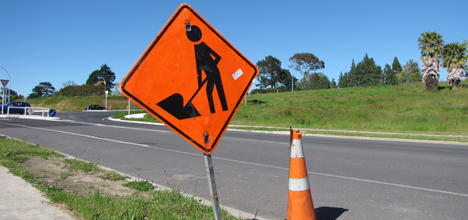
Geotechnical testing gets underway this week as part of the NZ Transport Agency's investigation into determining the Rotorua Eastern Arterial route.
The testing involves drilling boreholes and digging pits to collect soil samples and test for a range of properties including soil strength.
NZTA state highway manager Rod James says determining ground conditions is an important part of evaluating the type of roads and structures that would be required if a particular location was chosen as the preferred route.
'People can expect to see drilling rigs, trucks, and excavators along the three potential option sites,” says Rod.
They are Te Ngae Road, Vaughan Road and the existing designation.
'Testing will only be undertaken where the NZTA has reached agreement with the land owner(s) for access.”
The Rotorua Eastern Arterial is a project looking into options for the future of State Highway 30/ Te Ngae Road.
Currently 37,500 vehicles per day per day travel along this road which doubles as a vital inter-regional freight route and a local road.
This is predicted to increase to 50,000 vehicles per day within seven years. This is likely to impact on safety and congestion.
Three options are under investigation. They include upgrading the existing highway (Te Ngae Road), developing a new highway along the designated route closer to Lake Rotorua with two new intersections at Sala Street and the proposed Victoria Street Arterial, or using most of the designated route but upgrading Vaughan Road at the western end instead of continuing the highway over the sulphur flats.

1 comment
Peak Oil
Posted on 31-01-2011 16:55 | By ronillian
Our planners have obviously never heard of the concept of Peak Oil (= the end of the era of cheap oil). With oil at or past peak production globally and increased demand globally for oil, it is very obvious that market forces will push the price of petrol out of the reach of many ordinary New Zealanders very soon (2012 according to the NZ Parliamentary Library report). The implications for roading are that private cars will be used less and less for personal transport and public transport and bicycles will increasingly replace them. Why not use some modern thinking and be proactive rather than use the paradigms and models of old. I can confidently predict that by the time this road is ready, there will be LESS vehicles not more compared to today.The paradigms of old and the worn old "growth model" may have worked well in the past but the future is looking likely to be very different than a linear extension of the past. If the planners understood this they would spend less on "roads roads roads". They would put a higher priority on future-proofing us against the predicted oil shocks by diverting money AWAY from roading and into cycleways and public transport.We need some forward, visionary thinking!
Leave a Comment
You must be logged in to make a comment.