


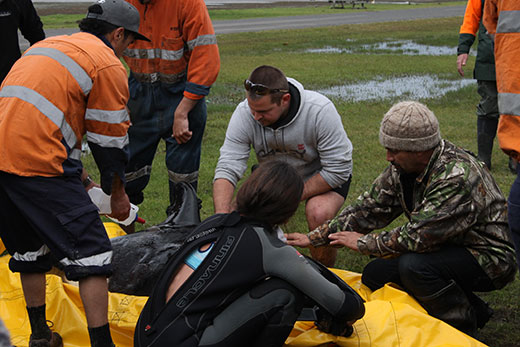
Bob the baby orca was tube fed overnight and to the delight of those caring for him, has 'done poos'.
'This means his system is still working. We remain cautiously optimistic, but there is a long way to go,” says Kit Wilson of the Orca Tactical Response Group.
Caring hands – volunteers keep Bob wet and calm before lifting him into the pool.
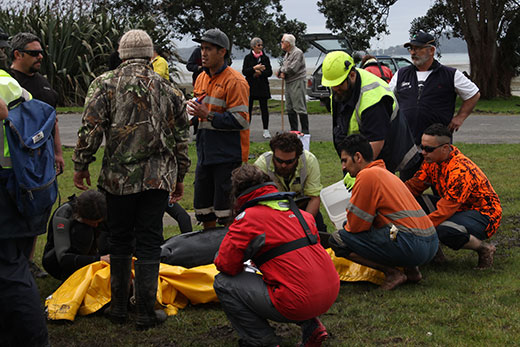
Yesterday marine mammal experts assisted by Department of Conservation and local volunteers, including iwi and mine rescue teams, successfully relocated Bob from the water to a temporary pool.
Dr Ingrid Visser of the Orca Research Trust and international orca expert Jeff Foster from America are overseeing his 'medical care” with Ingrid saying using the pool is like placing Bob in ICU.
The decision to move the calf was made following an assessment by the Orca Research Trust after Jeff and Ingrid concluded the calf needed to be removed from location because of its declining health.
'Given the calf's current level of emaciation, it's unlikely to hydrate quickly even if we could unite it with a pod,” says DOC operations manager Jeff Milham.
'DOC's primary focus remains the safety of responders and the public. We've been diligent to address any safety concerns associated with managing the orca's welfare.
'This is an unprecedented situation given the age of the calf. We are working with marine mammal experts and iwi to evaluate all the possible options.”
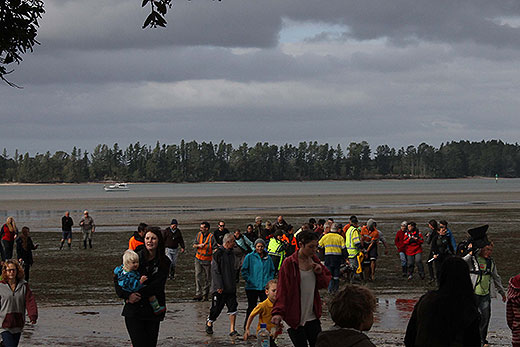
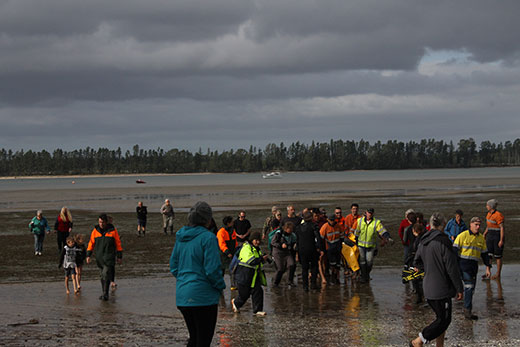
Volunteers carry Bob the baby orca from the harbour to a new temporary pool.
The location of the temporary holding structure, and the sea-pen are being kept confidential to avoid unnecessary interactions with the whale. An exclusion zone has been set up.
'The land-based structure is a temporary holding area that gets the maki out of the strong tidal flows in its current location,” says iwi representative Carlton Bidois.
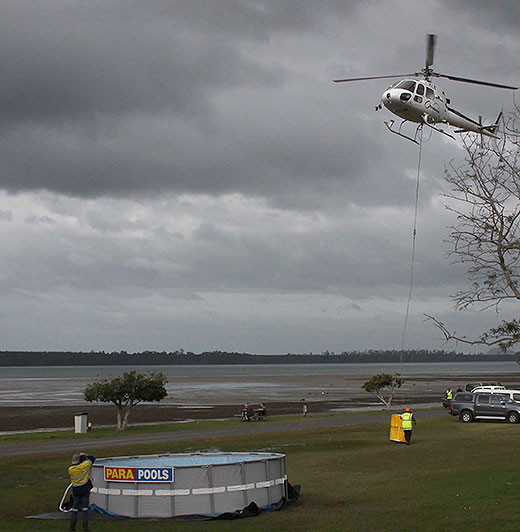
A helicopter with a monsoon bucket delivered sea water to the pool prepared for Bob the orca.
Background
- An Orca Tactical Response Group has created a structure to temporarily house the orca calf that has now spent 20 days without its pod in the Bay of Plenty.
- The health of the orca has been deteriorating over the past week, making it challenging to reunite the orca with a wild pod.
- The structure will protect the orca from strong tidal flows while the tactical team evaluates options for further intervention.
- The goal is still to reunite the young orca with a pod in the wild.
- This is an unprecedented situation given the age of the calf. DOC is working with marine mammal experts and iwi to evaluate all the possible options.
- DOC's primary focus is on the safety of the responders and the public.
For more information about the Orca Research Trust or to donated to assist its work go to: http://www.orcaresearch.org

3 comments
* * * * *
Posted on 04-08-2016 10:47 | By nzKIWIgirl
Oh my goodness ...... 'Exciting'
Great
Posted on 04-08-2016 12:59 | By overit
I am pleased the little fella is in a safe place and hopefully will gain his health back. I have mixed thoughts on it all but hope for a good outcome.
Lets hope...
Posted on 06-08-2016 22:17 | By GreertonBoy
The pod they finally 'unite him with' don't have him for breakfast? Can the experts give any past examples of reuniting lost calves with pods? I too am glad the little bloke appears to be doing well, but as I may have stated before, if he is a stubbie short of a 6 pack, I really think he would be better off in a safe marine display environment... you know, a man made environment for a man made mistake (imo)
Leave a Comment
You must be logged in to make a comment.