


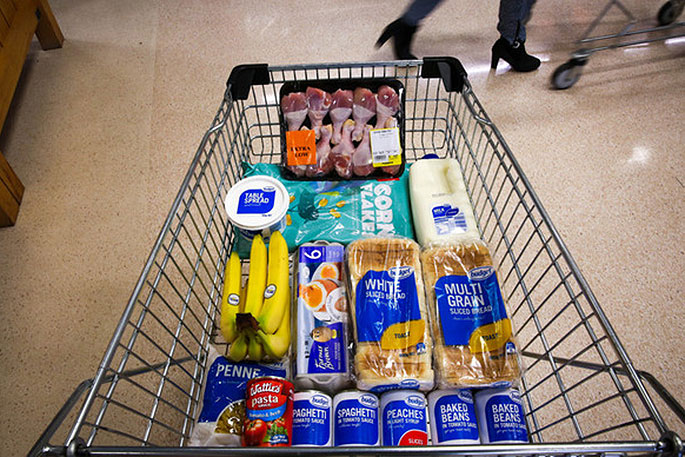
Tens of thousands of families are seeking government help to put food on the table.
Official figures from the Ministry of Social Development show 26,432 more hardship grants for food were given out compared to the June quarter last year, bringing the total to 137,424 grants between March and June this year.
Food is consistently the main reason for needing hardship assistance, says a MSD's report.
"Most of the value of grants provided is either for accommodation related costs (excluding Emergency Housing) or food assistance."
Food insecurity should not be a normal part of life, especially for children, says the Child Poverty Action Group.
"It's not only severe but it's widespread," says its spokesperson, and Professor of Health Economics at the University of Auckland, Toni Ashton.
"And it's not only for beneficiary families, it's for working families."
The figures may just be the tip of the iceberg as many families could feel too ashamed to seek help or could not due to difficulty of access, she says.
"There's an awful lot of people out there that are not getting help."
The gradual erosion of wages and benefits over the last 10 years had pushed people into hardship, she says.
"While we're getting a few increases in some areas, it's just making up for losses in the past - there's no catch-up.
"All the time it's like walking on a treadmill and not getting anywhere."
Poverty affects children the most, Ms Ashton says.
"It's children whose future is going to be impacted by this in terms of their ability to grow and their ability to learn."
Ms Ashton says eliminating sanctions on beneficiaries, particularly solo mothers, and altering the working for families criteria would help alleviate hardship.
Extending the In-Work Tax Credit to all families irrespective of their source of income, would put another $72.50 a week into their pockets, she says.
Ms Ashton says there is more willingness and sympathy within in the new government to fix these kinds of issues.
"There are some opportunities - let's grab them."
'There is a hunger crisis'
Last week the Auckland City Mission said it had distributed 15,879 emergency food parcels during the last year, nearly 3000 more than the previous 12 months.
That is a 22 percent increase and the highest in its 98-year history, Auckland City Mission chief executive Chris Farrelly says.
"There is a hunger crisis in our country.
"Our work in this area shows that food is a discretionary item in the budget of low-income New Zealanders.
"Someone with an income of $500 a week and expenses of $480 will only have $20 left for food, and if an emergency occurs, that money will get squeezed. This means people are unable to afford enough appropriate, quality food, and find they need to ask for emergency food assistance.
"It is a major source of shame and stress for these families."


0 comments
Leave a Comment
You must be logged in to make a comment.