


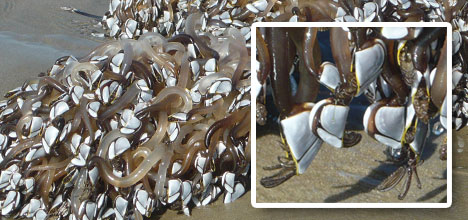
This log-load of mature gooseneck barnacles was photographed at Omanu Beach on Monday.
Lepas anatifera, the common gooseneck barnacle, is a common marine species and grows on floating logs, jetties, rocks etc.
Gooseneck barnacles are related to shrimp and crabs, and are edible; they are considered a Mediterranean delicacy.
A healthy load of goosenecks. Photo: Helen Ronayne.
When cooked, the larger gooseneck barnacles have a flavour described as a combination of shrimp, crab, and lobster.
The texture is said to be chewy and soft, like snails, and moist.
The goosenecks are often steamed in their shells above stock or seasoned wine, and served hot at the table.
They can also be boiled or grilled, and served hot, cold or at room temperature.
They are popular fare in Spain, Portugal, Chile, Greece, Italy, and Morocco.
They are commercially farmed in Washington State in the US Pacific Northwest.
In Spain, where they sell for about $2 each tapas bars, they are called percebes.
The Portuguese call them percebas.
One barnacle eater says they are worth about 100 Euros per kg, which adds a bit of value to the log at Omanu.
Gooseneck barnacles also gave rise to one of the stranger animal beliefs.
The heart-shaped shell, or ‘capitulum', is a chalky-white in colour and has black lines, once thought to resemble the head of the barnacle goose.
Barnacle geese rarely nested in Britain, and it was supposed, that the geese ‘grew up on the planks of ships' and the birds finally emerged clothed in feathers and flew away.
The curious theory also provided a convenient way round the Catholic church's ban on eating meat or flesh on Fridays.
As the barnacle geese were obviously 'not born of the flesh”, but from a barnacle, they could be eaten, not just on Fridays, but also throughout Lent.
There is a Public Health warning in place against eating shellfish on the Bay of Plenty coast.
The affected area includes the entire coastline from east along the Bay of Plenty coastline, including Tauranga Harbour, Maketu and Waihi estuaries, to Rogers Road at Pukehina and Tairua (including Tairua Harbour).
Also included in the warning are Matakana and Motiti islands, and all other inshore islands along this coastline.
The health warning applies to all bi-valve shellfish including mussels, pipi, tuatua, cockles, oysters, scallops as well as catseyes and kina (sea urchin).
Paua, crayfish and crabs can still be taken, but as always, the gut should be removed before cooking.
Barnacles are filter feeders and will absord paralytic shellfish poison toxins.
Toi te Ora Public Health medical officer of health Jim Miller says consumption of shellfish affected by the paralytic shellfish toxin can cause numbness and tingling around the mouth, face or extremities; difficulty swallowing or breathing; dizziness; double vision; and in severe cases, paralysis and respiratory failure.
These symptoms usually occur within 12 hours of a person consuming affected shellfish.
Jim says anyone suffering illness after eating shellfish should seek medical attention.
Monitoring of toxin levels will continue along the coast and any changes will be communicated accordingly.
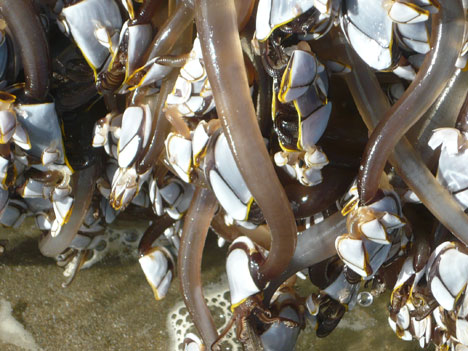
Photo: Helen Ronayne.
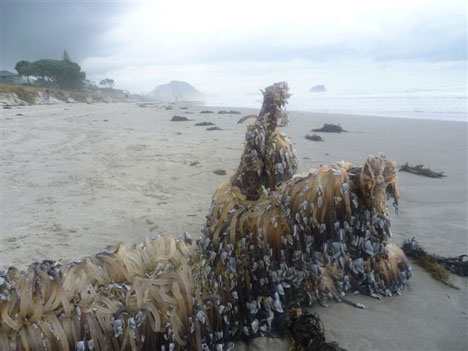
Photo: Vicki.
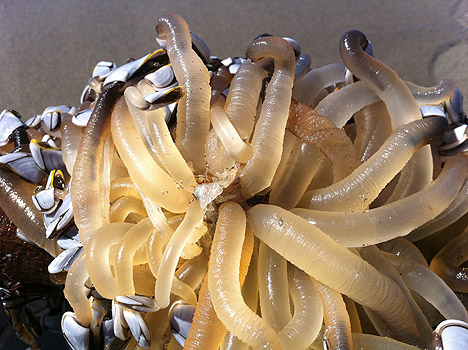
Photo: Luke Rosbak.

0 comments
Leave a Comment
You must be logged in to make a comment.