


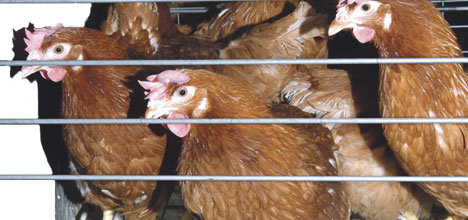
As New Zealand faces the introduction of a new enriched colony cage egg production system, there are calls to tighten the definition of free range and labelling of eggs from the RNZSPCA.
Juliette Banks, who runs the SPCA Blue Tick programme, says there is no clarity for consumers purchasing what they think is ‘free range'.
'There is no legal definition of free range; so all of these definitions are marketing terms, not welfare terms.”
Egg Producers Federation of New Zealand Executive Director Michael Brooks says the definitions of free range, barn and cage are, however, set out in the government's Code of Welfare for layer hens.
'There is often a claim made that there is no definition of these systems.
'That is simply not true – there is and it can be found in the Code of Welfare.”
In the current Code of Welfare, the definition of free range is ‘a system that provides birds with access to an extensive outdoor area and which typically includes housing without cages'.
The code then goes on to include recommended stocking densities and living conditions. 'What the new code does, and the Egg Producers Federation supports this, we said there should be tighter definitions around stocking densities, what the range should look like, daylight hours,” says Michael.
Juliette says that the Code of Welfare's definition of free range is very loose, however and the SPCA's free range standards give a thorough outline of what is required to produce ‘free range' eggs.
'There is more to farming a hen than just having a big paddock, they need shade and shelter.
'There is a lot more to it, it's caring for them, making sure their freedoms are met.”
Michael says the EPF submission on the new code asked for more detail on shade and shelter.
Through the Blue Tick Programme, Juliette says all consumers can go online and download the standards and find out exactly what conditions the eggs they are purchasing are produced in.
'They are the same standards the farmers use, the consumers can see, that our auditors use. It's all very transparent.
'We know there are some free range farms out there that need to improve their conditions.”
Juliette says there needs to be tighter regulations and more in-depth guidelines for free range farms.
'We are based on the freedom food scheme, which has been running for 17 years.
'All of the standards are international, adjusted for New Zealand conditions, we believe these standards are 100 per cent perfect for the animals.”
Michael says under the proposed new Code of Welfare the current cages will go and the enriched colony cage system will provide greater room for hens and the ability to scratch, perch and nest.
The options for farmers will be to switch to the colony system, free range or barn system.
'The big debate still to be decided is when current cages go and when the switch has to be made.”
The National Animal Welfare Advisory Committee is now deciding on when the enriched colony system will be introduced.
The SPCA Blue Tick programme is an accreditation scheme that certifies farms that humanely farm including barn and free range eggs.
'We have defined what these farming methods mean because there is not a legal definition of any farming method,” says Juliette.
'Free range is just a marketing term, it is not a farming method.”
The programme includes independent annual audits and spot auditing to ensure farmers are undertaking the required practices. Juliette says currently an individual farmer can run both battery and free range farms and may be mixing eggs within a packet, giving consumers no insurance they are receiving free range.
'There are no auditing or management systems to make sure this is not happening.
'You can not guarantee you are getting a free range system. With Blue Tick our auditing system goes from paddock to plate.”
Michael says this is incorrect – that all egg farms are audited every year by MAF.
'Part of the audit is checking eggs sold against eggs produced,” says Michael.
Juliette has been working in the Blue Tick programme for the last 18 months and says the programme is 'racing ahead”.
'We are seeing a real move towards Blue Tick from consumers, knowing and demanding it, farmers are approaching us. Not everyone can join Blue Tick as our standards are high and so they are having to change their farming practices to ensure they meet these standards and improve the welfare of animals.”

0 comments
Leave a Comment
You must be logged in to make a comment.