


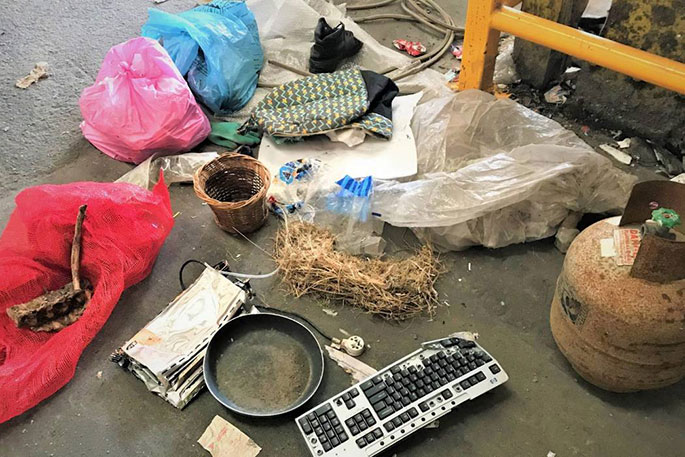
When someone decided to toss docked sheep tails into their recycling bin, the stench left workers at Smart Environmental's recycling plant recoiling and covering their noses.
Workers at the Kopu site, near Thames, have also had to deal with dead dogs, needle stabbings, and fires caused by reckless recycling efforts from the public.
A fire earlier this month, caused by a lithium battery inside a laptop being compacted, was a bleak reminder of the fire at the plant in March, which burned through more than 2000 bails of plastic.
It's lead Smart Environmental's Waikato and BOP regional manager Layne Sefton to appeal to the public ahead of their busiest collection season.
"The term the industry is using a lot is "wishcycling" - people think that just by putting something into their rubbish bin, they are saving the planet - they're not.
"We get everything from clothing items to outboard motors, to the worst and most extreme examples, a dog.
"There's a number of people in our community that treat the recycling bin as a rubbish bin."
Layen says there's still some degree of manual contamination removal - workers with gloves and masks - sorting through the rubbish that gets dumped at plants across the country - including at his site in Kopu.
He says it's the workers that have to deal with the brunt of unrecyclable materials.
There have been three injuries caused by needles at the plant this year alone, he says.
"People need to understand the plastic items that are readily able to be reused; things like milk bottles, soft drink bottles, food containers, and containers that have items generally in your kitchen or laundry."
Plastics number 1, 2 and 5 fit into this category, he says, and a good way to remember how to recycle is by using the phrase "topless, loose, and clean".
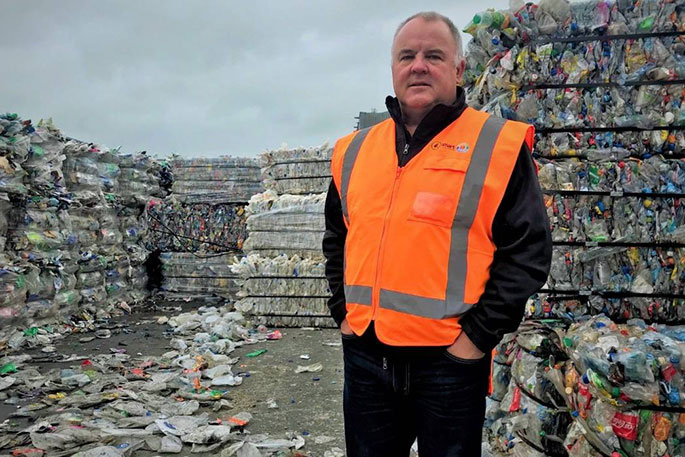 Smart Environmental's Waikato and BOP regional manager Layne Sefton stands at the site where a fire caused by a lithium battery burnt through bailed plastic.Photo: KELLEY TANTAU/STUFF
"That's how we like our recycling. Don't crush the cans or milk bottles, but put the tops into the rubbish, and don't tie everything up in a plastic bag."
The summer season will see Smart Environmental - which services Thames-Coromandel, Hauraki, Matamata-Piako and Waipā - more than double their collections to cater to the spike in population.
Layen hopes the latest spate of truck fires caused by unrecylable and flammable items is snuffed out, and the public educate themselves on what recycling really means.
According to Thames-Coromandel District Council, materials accepted at refuse transfer stations like the one on Burke St, include car batteries, dry cell batteries, LPG bottles, and hazardous and chemical waste in domestic quantities.
However, what cannot be disposed of includes radioactive wastes, explosives, products containing asbestos and more than 2 litres of fuel.
The Seagull Centre in Thames accepts E-Waste at a cost, and will be running a Recycling Drive on Saturday, November 23, 9.30am-1.30pm.
For a gold coin, residents can drop off laptops, tablets, phones, digital cameras, audio equipment and microwaves.
For $10 they accept desktop printers and monitors and for $20, televisions.

0 comments
Leave a Comment
You must be logged in to make a comment.