


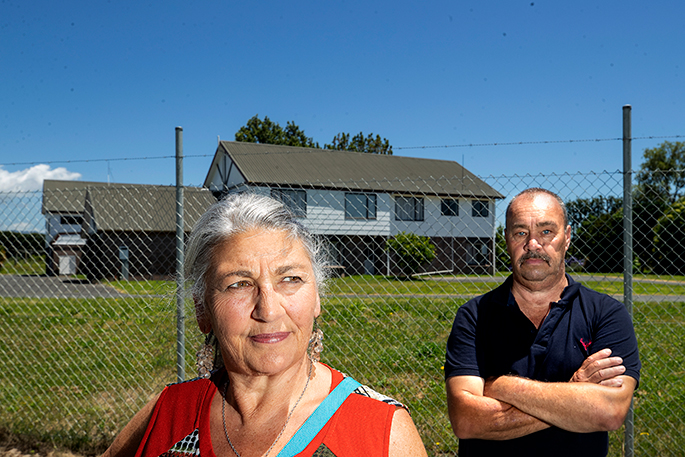
A proposal by the Department of Corrections to establish a transitional housing service in Te Puke has been met with concerns from local iwi and residents.
The proposed community residential transitional housing service at 240 Rangiuru Rd will house up to 15 men who will be supported to give them the best opportunity to transition to independent living and a crime-free life in the Bay of Plenty region after being released from prison, or who need suitable accommodation to serve a community-based sentence such as home detention.
Residents will receive 24/7 supervision and wrap-around support from service provider staff who will work alongside a probation officer and other local Department of Corrections staff to provide oversight and support with employment, education, training, life skills, health and wellbeing, and developing connections with whānau and community.
A service provider will be contracted to deliver these services, provide access to programmes and support residents to address any addiction or mental health needs they have.
About 80 members of the Rangiuru community met at the Rangiuru School on December 2 to discuss the proposal with two voting for it and the rest opposed.
Rangiuru community chair Colleen Pye along with several members of the community had attended a meeting 'at some short notice” with four Corrections staff earlier in the day where they were provided with a handout.
'Corrections had apologised for how this had all 'leaked” out and it had not been their intention to progress in this manner,” says Colleen.
'We don't think the location for the service is a good place. We understand the concept of what the Department of Corrections is trying to do and it's clear a change needs to take place in their system because it hasn't worked in the past.”
Department of Corrections Central Region Operations Director Louise Wood says the proposed service will be targeted primarily at men who have long-standing personal or iwi links to the Bay of Plenty area and who are genuinely looking to reintegrate into the area.
'Up to fifteen men will live at the property at any one time, but we will start with a smaller number and slowly build up to fifteen,” says Louise.
'The property will have 24/7 supervision with at least two staff members awake and on site at all times. We will also provide a 24/7 contact number for neighbours. We will install CCTV cameras and residents will have to agree to abide by house rules, which will include a curfew and a ban on alcohol. All visitors will need to be approved in advance, and they must comply with the house rules while at the property.”
'We already have a gang presence in Rangiuru Rd. For them to be that close is one of the reasons why it's not favourable for them to be in that locality,” says Colleen.
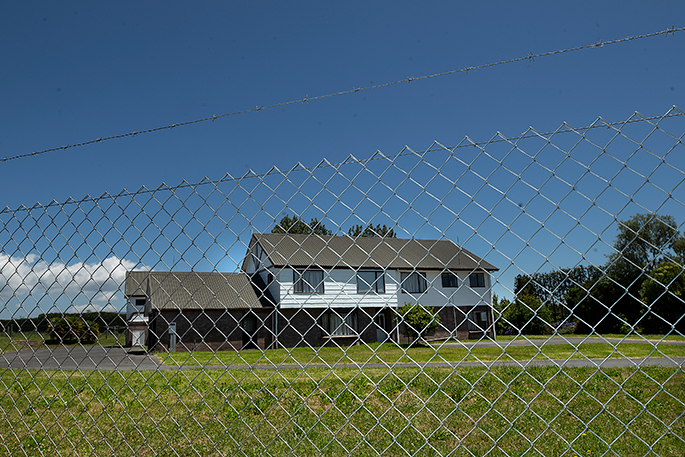 240 Rangiuru Road Proposed Corrections Facility. Photo: John Borren.
'We asked the Corrections staff if they would like to live next door to the facility. Their answer was silence.”
Louise says the Department of Corrections does not anticipate an increase in crime rates or gang activity in Te Puke as a result of the proposed service.
'To ensure this, we plan to work with local and regional Police,” says Louise.
'Corrections has many residential services like this set up throughout New Zealand and we are not aware of any increase in crime rates or gang activity in neighbourhoods as a result of these.
Men living at the address will be on community-based sentences and will be required to comply with conditions imposed on them by the Court or New Zealand Parole Board. Conditions can include curfews, GPS and electronic monitoring, not consuming alcohol or drugs and participation in a reintegrative and/or rehabilitation programme.
'Community Corrections monitors people's compliance with these conditions, holds them to account for any breaches, and delivers rehabilitation programmes and interventions that help them to live crime free,” says Louise.
'This may include drug and alcohol testing, which is routine across New Zealand for all individuals being managed by Community Corrections with alcohol and/or drug conditions. A Probation Officer will be assigned to the property to monitor all of the residents' conditions.
'More than 15,000 people were released from prison last year. Finding accommodation for people who are lawfully required to be released from prison is one of our most significant challenges.”
Louise says that the department currently provides around 1100 accommodation spaces each year in the community and have six contracts for the delivery of supported accommodation services in Auckland, Hamilton, Hawke's Bay, Wellington, Christchurch and Dunedin.
'We are continually looking at how we can improve support for people we manage in the community through accommodation services,” says Louise.
'In recent years, in response to an increasing shortage of supply of options in the housing market, particularly for those with complex needs, we have increased our investment in accommodation and support services from $3.8 million in 2016 to over $7 million per annum. In addition, we received $57.6 million in Budget 2018 to deliver housing and support services to people serving community-based sentences, on bail awaiting trial, or who have recently left prison.”
Department of Corrections staff had met the previous week with the Tapuika Iwi Authority in Te Puke and a member of the iwi presented a report of that hui to the December 2 Rangiuru community meeting. Iwi say that while recognising that a service of some kind was required, they do not support the proposed Rangiuru Rd location.
'We met with kaumatua from Tapuika in October, which led to a wider whānau hui in November,” says Louise.
'Tapuika whānau indicated that while they were supportive of the proposed service, they had some concerns about the specific location. In response to this, we have decided to slow our engagement process down in order to identify the community's concerns and work together to address these. We have since contacted Tapuika Iwi Authority and expressed our willingness to meet in the new year to discuss this kaupapa.”
Iwi also noted that it was of particular concern that no guarantees could be provided by Corrections as regards to the safety and security of the surrounding community, and they were concerned that the residents of Rangiuru Rd had not been given a bigger say in the process. The iwi listed three other roads they also deem inappropriate for the service.
Colleen says that residents of Rangiuru Rd were not allowed to attend the hui that Corrections had arranged with iwi.
'Corrections have advised that they have consulted within a radius of 500 meters of the building, which is four sets of residents who live within that distance, and that is all their regulations and rules require them to do.”
Louise says the department is only at the beginning of their engagement with the community.
'We want to ensure that people transitioning into the Bay of Plenty community have a safe and stable place to live where they can receive wrap-around support,” says Louise.
'Every month there are around thirty men with an accommodation need being released from prisons into the Bay of Plenty.
'We do not currently provide enough supported transitional accommodation in the Bay of Plenty, and there is a real and identified need for this right now.
'Without a service like this, some men will find themselves homeless or in unsuitable accommodation, without any support. This creates conditions that can lead to reoffending,” says Louise.
'Community engagement is a critical part of setting up any new Corrections residential service, and we do not make any final decisions until we have engaged with the community.
'We want to be the best neighbours that we can be, and that starts in our commitment to engaging openly and transparently about what we want to do. So far, we have met with elected officials, whānau from Tapuika iwi, neighbours, education providers and community leaders.
The fact sheet provided by Department of Corrections states that their community engagement involves 'talking with the community around what we want to do and how we can make it work”. The email address provided by the department for contact is [email protected]
'There are doubts about Te Puke Police's ability to support the community around this when it goes wrong and in their ability to respond quickly,” says Colleen.
'The local Te Puke community constable did not know about this but when raised with Corrections today they advised 'it had all been notified to Police much higher up”.
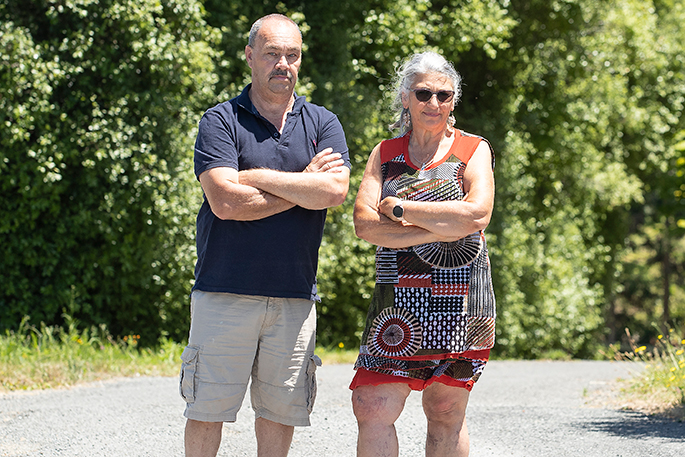 Colleen Pye and Grenville Lints outside the Rangiuru. Photo: John Borren.
Kāinga Ora – Homes and Communities purchased 240 Rangiuru Road on behalf of Ara Poutama Aotearoa. If Corrections decide to go ahead, Manaaki Support Services will take on the lease as the preferred service provide although the fact sheet states a contract has yet to be signed.
'If we decide to go ahead, we will partner with a service provider to deliver the service,” says Louise. 'In addition to the wrap-around support and navigation services described earlier, the service provider will also provide transport options for residents to transport them to off-site employment, education, and other services as needed.
'There will be a requirement for a strong Te Ao Māori approach in the delivery of the service, preferably involving mana whenua. We went through an open tender process and identified Manaaki Support Services as the proposed service provider, in the event that we establish the service.”
A copy of the consent for the proposed building was obtained by the Rangiuru community from Western Bay Council.
'The consent was actually a variation to an existing consent and was granted on December 19 2019,” says Colleen.
'It was non-notified which means it was not put out for submission and comment as the Council advised it did not have to be, given that the building was already consented for drug and alcohol rehabilitation purposes and the variation sought was not felt sufficiently different. There were expressions at the meeting that Corrections had 'used a back door” on this to avoid us.
'Why did Corrections not consult with us much earlier, given the variation to consent was sought and granted almost a year ago,” says Colleen.
Most residents will live at the property between six to twelve months, but some may stay for up to eighteen months if they still need support to reintegrate into the community. Residents will be permitted to move out earlier if they are ready and have found suitable long-term accommodation.
'We want to be the best neighbours that we can be and minimise any disturbances this service could have on the community,” says the fact sheet.
'As part of this, we will encourage residents to give back to the community through participating in activities such as setting up a community garden onsite. We will work with the community to identify other ways that they may wish to be involved.”
Residents will not have access to their own vehicles but may bike or walk outside the property. Some residents will be serving sentences with conditions that include a curfew or being subject to electronic monitoring and will require preapproval from a probation officer to leave the property.
'Public safety is our top priority, and a person will not be permitted to reside at the property if we think the risk to public safety could not be safely managed.
'If someone is interested in living at the property, they will have to undertake a careful and robust assessment and selection process. The service is opt-in and a resident will not be ordered to live there by the judiciary.”
Several attendees at the Rangiuru community meeting expressed disquiet about the lack of risks Corrections have not highlighted and expressed severe doubts about Corrections ability to either monitor or do anything concrete as incidents and risks arise.
'Corrections are simply doing dishonest dumping on us when they know most of the offenders will not be from the Te Puke or Rangiuru area,” says one person at the meeting.
'These offenders will be able to walk and ride bikes outside of the facility, but where are they going to go given there is nothing here to do?” says another. 'Shops and town are some considerable distance away. Clearly we will become the target of these people as well as their approved visitors creating discomfort.”
Concerns were also expressed that despite Corrections handout factsheet criteria, there could be ‘creep' around these as they seek to keep the place full or because they would have higher risk offenders with nowhere to go.
'In other residential services that we deliver around the country, community members contribute to those services,” says Louise. 'If we decide to go ahead, we will look to establish a community representative group so that community leaders, iwi and neighbours can be involved in how the service is delivered, provide feedback and identify opportunities to work together to make the service work for everyone.
'For example, we recently established a similar residential service in Hawke's Bay, called Te Hiringa, which has been warmly embraced by neighbours after initial concerns around safety. Te Hiringa has been operating for a year and is now successfully established in the community.”
'Public safety is our top priority, and a person will not be permitted to reside at the property if we think the risk to public safety could not be safely managed,” says Louise. 'If someone is interested in living at the property, they will have to undertake a careful and robust assessment and selection process. The service is opt-in and a resident will have to be motivated to live there and receive the support provided. They will not be ordered to live there by the judiciary.”
Men who are charged with or have convictions for sexually offending against adults and children will not be permitted to live at the property. Men subject to extended supervision orders or intensive monitoring conditions will also not be permitted to live there.
Men with high or complex needs will not be eligible to live at the property. This includes men who present as being at high risk of harm to others; have a high risk of serious reoffending, such as highly violent or sexual offending; have serious addiction or substance abuse issues; have acute mental illness; or have cognitive impairments.
'It is important to remember that these residents would otherwise be in the community without this level of quality wrap-around support, while serving a community-based sentence, such as home detention,” says Louise. 'Without a residential service like this, these men will be at a higher risk of reoffending. If we decide to go ahead, it will make communities safer.
'We want to be the best neighbours that we can be and minimise any disturbances this service could have on the community. As part of this, we will encourage residents to give back to the community through participating in activities such as setting up a community garden onsite. We will work with the community to identify other ways that they may wish to be involved.
'We know from research that by giving people 24/7 support and assistance with employment, education, training and life skills they will be more successful in their safe transition back to the community.
'This is what this proposed supported accommodation service will provide. Ultimately, services like this are crucial to helping people live crime-free and making our communities safer,” says Louise.
'We already have a critical shortage of housing in the Tauranga and Te Puke area,” says Colleen. 'Good people are trying to get housing and here's a house that could be utilised for emergency housing, yet they want to utilise it in a way that's not even suitable. It makes a mockery of the fact that there are families sleeping in cars, families are displaced because there's not enough social housing. Here we've got housing yet we can't get them in.”

0 comments
Leave a Comment
You must be logged in to make a comment.