


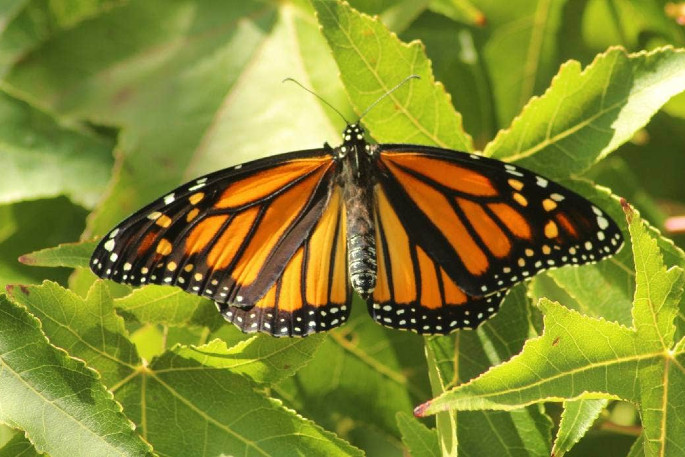
It is perhaps New Zealand's most identifiable butterfly, but the monarch is in decline and the cause could be the swan plants people buy to attract them.
The global population of monarchs has declined by 80 per cent and experts fear the figures could be similar across New Zealand.
Many people buy swan plants – which are a type of milkweed – to encourage monarch butterflies as they like to lay their eggs on the plants.
However, instead of helping the flying insects, the plants could be contributing to their fall in numbers, as some have toxic pesticide on them which are harmful to the caterpillars.
'Last summer, several people who bought swan plants in Wellington to feed caterpillars had all their caterpillars die,” said Jacqui Knight, founder of the Moths and Butterflies of New Zealand Trust.
'A plant was forensically tested and found to have two insecticides and one fungicide on it.
'The store had assured the customer that the plant was pesticide-free. It clearly wasn't.”
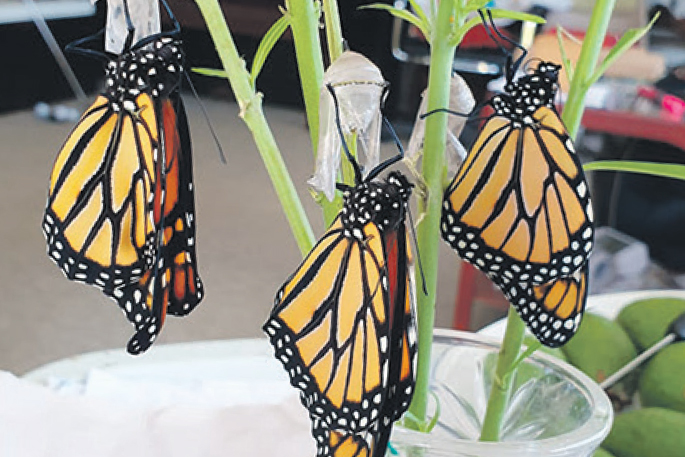
Monarch butterflies can detect swan plants from a kilometre away. Photo: SunLive.
Commercial growers use pesticides when producing swan plants in large quantities, to protect them from pests.
People who want to attract monarchs are encouraged to grow swan plants earlier in the season and let them get to full size in their garden.
Alternatively, people should keep the plants protected from the monarch butterflies until they are free of pesticide.
In 2018, swan plants were so in demand there was a national shortage, with one store selling out as quickly as they could get the plants in.
.jpg)
Bianca Woyak has won the Prime Minister's Te Puiaki Kaiwhakaaho Putaiao Science Teachers Prize for her work on many hands-on environmental projects, including one to bring back a butterfly endemic to the area. Photo: Chris Skelton/Stuff.
The monarch is originally from North America but was first recorded in New Zealand in the mid-1800s. It is considered a native because it flew or was blown here.
New Zealand is home to 26 types of butterfly. Others include southern blue, Harris's tussock and black mountain ringlet.

3 comments
More likely predators
Posted on 23-10-2022 16:21 | By The Sage
My swan plants atr prolific and regenerate every year. I have Monarchs in my garden all year round and caterpillars for at least six months a year. The cause of death is most likely to be wasps or Praying Mantis. Given my plants never have any kind of pesticide on them, they do get aphids sometimes and I manage to dispense with them easily enough without harming caterpillars. My garden seems a haven for them and I have always done my bit for the Monarch Butterflies.
So Sad
Posted on 24-10-2022 06:32 | By Thats Nice
I would have thought plants from Garden Centres have been spraying long before now? Whats changed??
Well Done, Sage!
Posted on 24-10-2022 15:46 | By morepork
I'm not a gardener but my neighbours are, and I love watching the monarchs in Summer, re-enacting the Battle of Britain over my nectarine, peach, and lemon trees. I used to have a gardener but his solution was to spray roundup everywhere so we parted... (Now I can't afford another one... :-)) If we allow these butterflies to become extinct it will be a shameful tragedy.
Leave a Comment
You must be logged in to make a comment.