


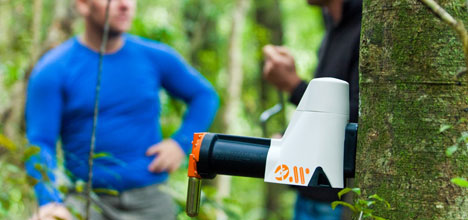
Three tourism operators have joined forces to install 40 self-setting rat and stoat traps in Whirinaki Forest, following funding from the Bay of Plenty Regional Council.
Foris Eco-tours, Te Urewera Treks and Nature Connection have been awarded a grant from the council's environmental enhancement fund to purchase the new traps, made in New Zealand by Goodnature.
Goodnature self-setting rat and stoat traps are to be used in Whirinaki Forest.
'This is our way of complementing and strengthening DOC's pest management work in the Whirinaki Forest and helping protect the internationally - significant area in which we operate,” says Tom Lynch from Foris Eco-tours, which offers guided walks and rafting trips in the area.
'Whirinaki Forest has one of the largest remaining populations of kaka, as well as kiwi, whio/blue duck and kakariki. As tourism businesses operating in the forest, we wanted to do something to help DOC protect these taonga for everyone.
'Stoats are the number one predator of kaka and kiwi– of the 5000 kaka left, only 1000 are female because the nesting females are killed by stoats as they sit on their nests. To put in perspective how rare kaka are, according to DOC's estimates, there are 13 kiwi for every kaka."
The A24 rat/stoat Goodnature traps are powered by a CO2 cartridge that resets the trap after each kill and can humanely kill up to 24 animals before needing to be reset. The traps have long-life baits, are easy to service and only need to be tended every few months. DOC is also trialling the traps around the country.
'It is great to see tourism operators around New Zealand getting involved in biodiversity protection” says Stu Barr from Goodnature.

0 comments
Leave a Comment
You must be logged in to make a comment.