


New research has shown farmers have a much tighter weather window if they want to minimise ammonia volatilisation from urea and ensure the best nitrogen boost possible.
Urea is the most common form of nitrogen fertiliser in New Zealand, promoting rapid pasture and plant growth.
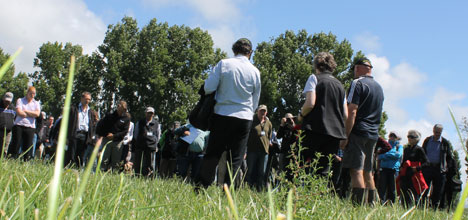
Nitrogen leaching was among topics discussed by delegates at last week's Grasslands Conference in Tauranga.
However, nitrogen uptake can be weather-dependent with farmers trying to time applications to coincide with rain, so nitrogen gets quickly into the soil and gaseous losses are minimised.
Speaking at last week's Grasslands Conference in Tauranga, Ballance science manager Aaron Stafford says a new study, undertaken by Landcare Research, has shown the amount and timing of rainfall post-application is considerably more critical than previously thought.
'Previously 10 mm of rainfall within 24 hours of application was considered sufficient to minimise volatilisation and hence the best nitrogen uptake.
'This new work highlights the critical link between rainfall, or irrigation, post-application. New data suggests that beyond eight hours after application, the amount of rainfall has minimal impact on suppressing ammonia loss from urea.”
Aaron says previous research showed when urea was applied at 100 kg N/ha to a moist soil, if rainfall did not arrive until 24-48 hours after application total ammonia losses were in the order of 20-30 per cent of the N applied.
'Our new research sought to replicated these results, but at rates of urea more typical for pastoral application [30-60 kg N/ha], the results were very consistent with the previous research, in that 10 mm of rainfall at eight hours after application reduced ammonia loss to around eight per cent of the N applied – and whereas 10 mm of rainfall occurring a day after application had very little effect on reducing ammonia loss [still around 20-30 per cent of the N applied].
This suggests that ammonia loss occurs soon after urea is applied, says Aaron. 'Basically, it needs to be raining at the time of application to minimise ammonia loss from urea.”
The new research further confirms the value of farmers using urea treated with a urease inhibitor. It also supports previous Ballance science-based claims that its SustaiN Green product, which is urea coated with the urease inhibitor AGROTAIN nitrogen stabiliser, offers farmers more flexibility to apply nitrogen when it's needed without trying to second-guess the weather.
'We know SustaiN Green showed an average 50 per cent reduction in ammonia volatilisation relative to urea. The new data suggests this product should be used in preference to urea unless it is raining at the time of application.”
Aaron says the work is important from both productivity and an environmental perspective.
'Urea is the most common form of nitrogen fertiliser and when used efficiently can enhance farm productivity. However, ammonia losses from urea can reduce nitrogen conversion efficiency, reducing its cost effectiveness; while also potentially being detrimental to the environment.”

1 comment
Proper checks in place??
Posted on 16-11-2013 21:17 | By pilgrim
Hopefully lessons have been learnt from the Dicyandiamide (DCD) nitrogen stabilizer getting into milk. What tests have been done on this "improved" version called Agrotain?
Leave a Comment
You must be logged in to make a comment.