


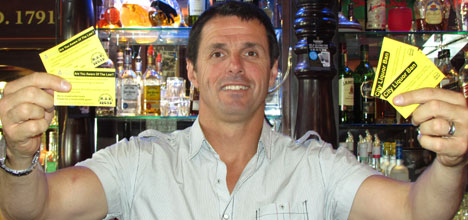
A bold decision of issuing ‘yellow cards' to people showing signs of bad drinking behaviour is paying dividends, despite a rough introduction period, according to one Mount Maunganui bar owner.
For the last three years, a handful of Mount Maunganui bars have been promoting a yellow card system, which sees patron's drinking limits toned down in an attempt to prolong their time at the bar.
Hospitality New Zealand Bay of Plenty chairman Clayton Mitchell, with the drinking-related yellow cards he administers in both his Mount Mellick and Ivory bars.
Hospitality New Zealand Bay of Plenty chairman Clayton Mitchell says the carding system, taking a leaf out of the sporting playbook, is beginning to make its mark following initial rejection.
When a patron is issued with a yellow card, staff are informed and the person is no longer served shots or ‘short' drinks – instead, being topped up with water or soft drink. If they are issued two yellows, they are escorted from the premises.
And Clayton admits the rollout of the cards was not pretty to begin with, saying in hindsight bars were a little heavy handed on the dishing out of the cards – causing some anger.
'People were taking offence to how we were monitoring their drinking or controlling it.
'This is the intervention before we get to remove you. It shows signs that the levels you are drinking at are too high; and you need to slow down and have a water.”
Western Bay of Plenty alcohol harm reduction officer Sergeant Nigel McGlone says though the cards have been used in various forms since 2008, he endorses the proactive approach from Clayton and other bar owners.
The concept followed on from Canterbury's use of the cards in a similar play on sporting references, with some minor adjustments, says Nigel.
'They would get a yellow and then a red card and they were out. They had to be careful, as people would strive for the red and keep them as a trophy.”
With the festive season in full swing, Clayton says this is typically a time of high consumption because people generally have two or three social events in a week or in a row – leaving a higher level of alcohol in their system.
But a social change is seeing people taking personal responsibility and asking for the yellow cards as a way to keep each other in check when they are out on the town.
'The moral of the story; people are responsible for their own actions. This is a way for people managing their own selves, because we as a society have stepped away from personal responsibility,” says Clayton.
'It is prevention, by way of intervention.”

4 comments
ironic
Posted on 28-12-2013 08:28 | By Capt_Kaveman
we have a drinking problem in this country yet he was voted in at council elections what sad society we live in
moderations the key
Posted on 28-12-2013 13:20 | By kat.lodge
good on Mr Mitchell for doing something realistic!...you'll never stop people wanting to party prohibition proved that! at least its a step to encourage people to moderate their consumption! well done for being innovative!!!thank god we got someone sensible on the council at last! ,
For the Record...
Posted on 29-12-2013 04:39 | By austinz
These cards were produced and designed with a local flavour through a joint Police/ACC project in 2008 called 'M.O.D. Squad' (M.O.D stood for 'Moderating Our Drinking'. The cards were provided to bars through that project - along with wristband and temporary tattoo giveaways for the public - not designed or innovated by the licensees. Good to see them still being used though.....
A Kaveman society perhaps?
Posted on 30-12-2013 15:00 | By Annalist
Good on Clayton for taking an initiative that tackles offenders and not the general public who drink responsibly. Normal people are getting sick of having their lives restricted. There's been rules and regulations about alcohol for years, but the problem seems to get worse. Go figure. Good to have a normal person with initiative elected to council. Self responsibility is the key.
Leave a Comment
You must be logged in to make a comment.