


They figured the weather, pests and diseases and fickle markets would be challenging, but Deb and Patrick Thorp didn't factor in pukeko as a risk when they ventured into the cut flower business.
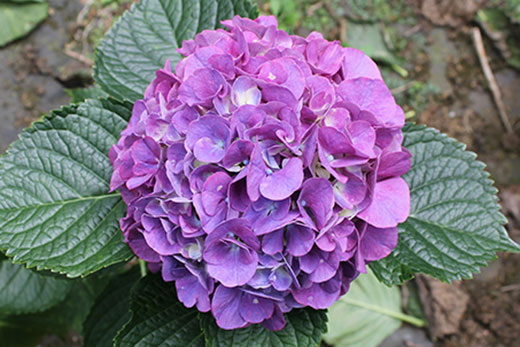
Named varieties of hydrangea at Growing Edge come in a range of subtle and vibrant colours.
'It was so disheartening. I'd spend all day carefully putting in young plants, only to have pukeko rip them out, time and again,” says Deb.
It wasn't until they discovered a fish-based smelly spray, which the plants liked but the birds didn't, that the pukeko problem was resolved.
That was six years ago and today it would take a bird the size of a moa to uproot the 5000 hydrangea bushes the couple has planted. However, there's always a small plot of young, new varieties which need pukeko protection.
Patrick and Deb were living on Waiheke Island when they decided to make the move to the Bay of Plenty and begin their own horticultural business near Katikati.
Patrick, who has a diploma in horticulture, was Deb's boss when they both worked in the Auckland Domain, where Deb had completed an apprenticeship in horticulture.
'We knew we wanted our own business working outside, not in glass houses; and because of the cost of land at Waiheke, that wasn't going to be possible there,” says Patrick, who still consults for the Auckland Council's parks department.
Avocado
After much research, and talking to other flower growers, the couple decided to plant hydrangea under shelter on two hectares of land at Katikati. The balance of the 4.5ha block includes 150 mature avocado trees, left from those removed to make way for the flowers. Like many avocado orchards, it has been inconsistent in cropping. Flowers provide a more reliable income.
'People often say we are growing ‘grandma's flowers' because they're considered old-fashioned, but we don't mind. We love them and hydrangea are enjoying a return to popularity,” says Deb.
The Thorps export 99 per cent of their flowers under the business name Growing Edge. About 50 per cent goes to the Middle East, 25 per cent heads to America and 25 per cent goes to Japan. New markets are opening up in India and China, which offer promise.
'There is not a very big market for the flowers in New Zealand, as everyone seems to have them in their gardens,” says Patrick.
However, Katikati's Flowers on Main often uses the white blooms for wedding arrangements and bouquets. Deb says it took about two years until the first commercial flowers could be cut for market.
'One of our biggest learning curves was how to pack them. We were asked to put up to 50 stems in a box and just couldn't figure out how that would work. In fact, hydrangea are remarkably tolerant of being gently compressed.”
Hydrated
'Once taken out of the box, so long as they are well-hydrated, they will spring back to shape,” says Patrick. The name hydrangea comes from the Greek word ‘hydor', meaning water, and ‘angos', meaning jar or vessel; and perhaps refers to the flower's need for water and its ability to come back from wilting when given a drink.
Water is essential to grow top quality flowers, so the Thorp's plants are irrigated. While they need sunlight, too much burns or bleaches them, so the shade structures protect from both wind and sun.
The plants receive regular fertiliser and spraying is carried out by a contractor to control insect, pests and disease.
'Initially, we grew a lot of plants from cuttings; and while the flowers were good, exporters told us we would be better off with named varieties because then customers would know exactly what to expect when they placed an order,” says Patrick.
Today, they grow all colours from the well-known blues to pink, deep red and white.
One of the appeals of hydrangea is the longevity of the blooms, which can be left for up to two weeks before picking.
'We pick as many as we can for fresh blooms, because you never know what's going to happen later in the season. But then there is a market for the ‘antiques' which come later,” says Patrick.
Antique
‘Antique' blooms are those which begin to gently fade or even change colour late in summer, creating an even more ‘old-fashioned' look for the classic blooms.
There's a strong export market for these flowers too, but preparing them needs extra attention as any damaged or brown petals must be removed.
Deb's parents Brian and Noeline Crook often lend a hand with quality control and packing, as does Patrick's dad,Tom, on occasions.
More regular hands in the pack shed are the couple's children Nathaniel (26), Zac (23), Lewis (17) and Gemma (14).
'It's a real family business and the older two have often earned their university holiday funds working with the flowers,” says Patrick.
As much as they enjoy the flowers and the outdoor nature of the work, Deb says growing hydrangea means no summer holidays.
'Our busiest time is through summer, when everyone else is on holiday. It's lucky Patrick loves fly fishing, but I may need to learn how to ski to get the most out of a winter holiday.”
Flowers are picked in the early morning and at night, as it gets too hot past 10am to before 5pm. This season the couple has invested in a small chiller; and each night a courier truck arrives to collect the blooms to take to the exporters in Auckland, ready for air-freighting off to market.
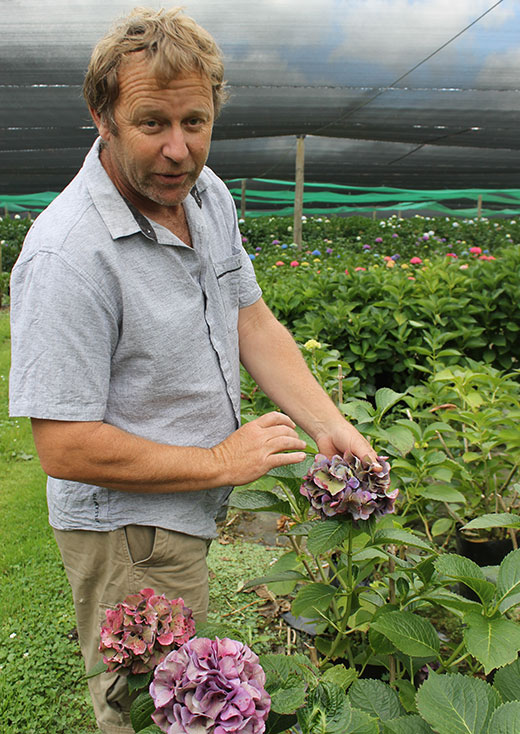
Patrick Thorp with 'antique” hydrangeas.
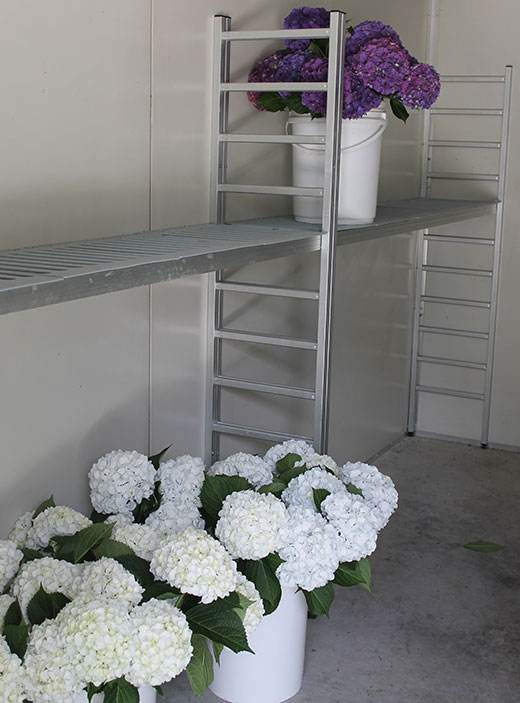
A cool room has been built to house flowers.
Insects
Flowers for the USA must be stripped bare of leaves; and for all markets blooms are inspected carefully for any insect pests. However, as some are too small to be seen by the naked eye, they are again checked by entomologists before shipment. Growing Edge has not had too many problems with insects on flowers. But several years back, when a moth was found in one consignment, 15 boxes of blooms were destroyed.
Pruning is a crucial part of managing the plants. 'Sometimes we're asked why we don't cut them with a hedge cutter because the plants seem so hardy, but if we did we couldn't get the number of flowers or length of stem we need,” says Deb.
So each of the 5000 plants must be individually and carefully pruned in winter.
Growing hydrangea flowers has by no means been a ‘get rich quick' scheme for the Thorps. The start-up costs, including the extensive shade structures and irrigation, are significant; it is at least three years before the plants begin to produce a commercial size crop; the work is labour-intensive; and markets and currency rates can fluctuate.
'We started just before the global financial crisis which didn't help, but it did mean exporters began looking for other markets and those in China and India are looking promising, which is a good thing for the future,” says Patrick.

0 comments
Leave a Comment
You must be logged in to make a comment.